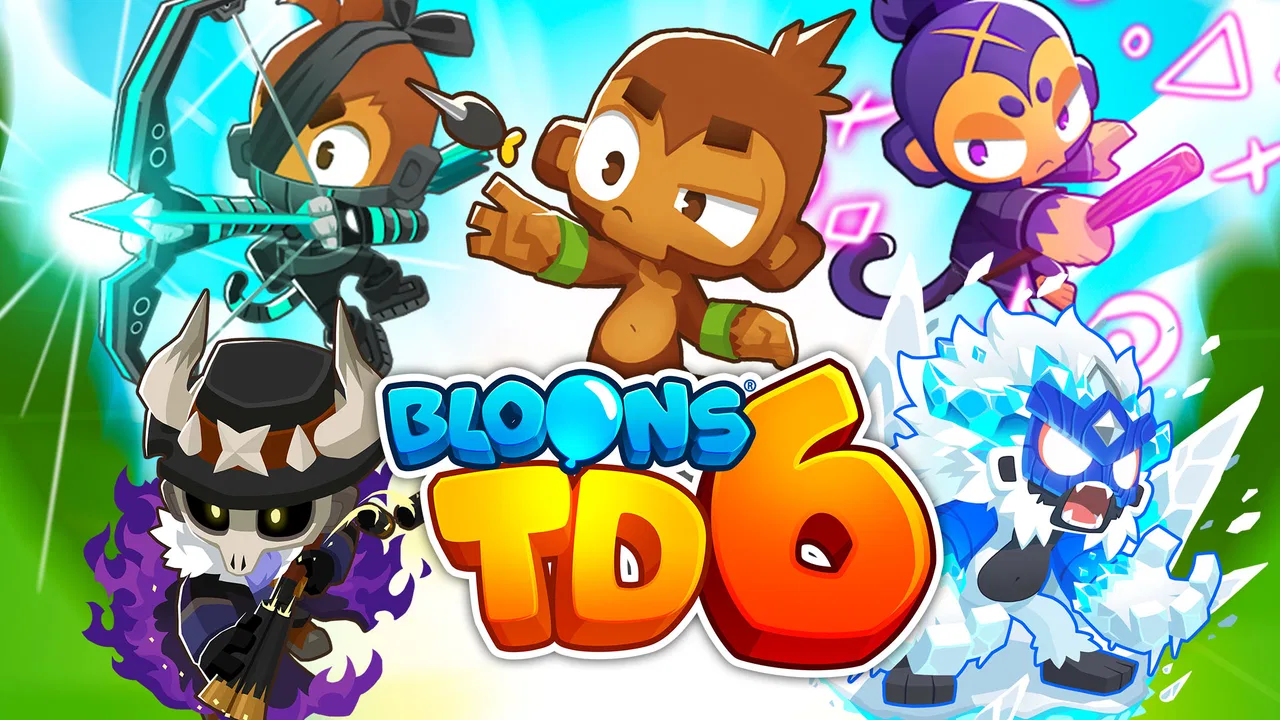
Bloons TD 6 NETFLIX
- 4.6
- Rating
- 5.00M
- Installs
- Free
- Price
 Analysis by App-foxy
I first approached Bloons TD 6 NETFLIX as a quick strategy game for filling a few spare minutes, but it became much easier to appreciate when I treated it as a shared household game. One person can start a challenge, another can suggest a better tower position, and a younger player can enjoy the colorful monkeys and balloons without needing to understand every tactical choice immediately. That mix makes it unusually easy to discuss while playing, even though the actual decisions still belong to the person holding the device.
This is a tower-defense game from Netflix, Inc., built around stopping waves of balloons before they reach the end of a route. Its appeal is not simply the cheerful presentation. The real attraction is the gradual process of learning which towers work together, when to spend resources, and how to respond when a comfortable plan suddenly stops working. I found it welcoming at first, but deep enough that a casual player can keep discovering better approaches long after the basic rules are clear.
How it works when several people share one device
The best household use case is a short planning session rather than a formal multiplayer meeting. Imagine one person playing on a tablet in the living room while someone else watches during a break. The viewer can notice a weak part of the defense, suggest saving resources, or point out that a tower is covering the wrong stretch of track. Because the action is organized around visible lanes and clear threats, it is easy to follow without taking control.
You May Also Like

 Blood Strike: 2.5 Anniversary
Blood Strike’s Loadouts Turn Every Drop Into a Tactical Gamble
A close look at Blood Strike’s custom loadouts: how fast access to signature weapons reshapes its battle royale rhythm, rewards preparation, and narrows the gap between fights.

 Pandora - Music & Podcasts
Pandora’s Music Is Easy to Start, but Harder to Recover
Pandora’s strength is its low-effort path from a seed to a station. Its weak spot is how much confidence it asks you to place in connection, setup, and quiet recovery.

 8 Ball Pool
 Is Built on Rivalries, Rematches, and Routine
A close look at the rivalries, rematches, shared routines, and unanswered safety questions that turn a quick pool match into a persistent mobile community.

 Samsung Music
’s Quiet Strength Is Playing What You Already Own
Its reach comes less from spectacle than from dependable access to a personal library. That simplicity is both the app’s strongest retention engine and its ceiling.

 AccuWeather: Weather Radar
AccuWeather Review: A Quick, Clear Forecast for Everyday Decisions
For everyday plans, the best forecast is the one you can understand quickly. AccuWeather makes rain timing, radar, and local conditions easy to act on, with a few trade-offs.

 Hill Climb Racing
Why Hill Climb Racing Still Turns Crashes Into One More Run
A tiny car, a bumpy hill and one more upgrade: Hill Climb Racing keeps resurfacing because its simple chaos makes every near-miss feel personal.
More From Our News Desk



That makes the game suitable for families who want something more thoughtful than a purely reflex-based title. A child may focus on popping balloons and choosing colorful towers, while an older player explains why placing a powerful unit too early can leave the rest of the defense underdeveloped. I like that the conversation naturally moves from “what should we buy?” to “what problem are we preparing for?” That is a useful introduction to planning without turning the session into a lesson.
Shared-device play does have a practical boundary: the game is designed around one active player making the decisions. Passing the device back and forth can work for a challenge, but it is less comfortable during a tense wave. I would agree beforehand on who is playing and who is advising. Otherwise, a well-intentioned suggestion can become an argument over placement, especially when a small mistake affects several later rounds.
For a household with different attention spans, the game works best when each person has a defined role. One player can handle immediate placement, another can watch the available resources, and a third can look for threats that the player is missing. This is not a built-in family mode; it is simply a useful way to turn a solo strategy game into a cooperative viewing experience without pretending that everyone is controlling the same match.
Why the strategy remains interesting after the first session
The opening is easy to understand, but the decisions become more demanding as the route fills with threats. A tower that seems excellent in one position may be poor in another because its range does not cover enough of the path. A cheap improvement can sometimes be more valuable than saving for an expensive unit, particularly when the defense is about to be tested. I learned to stop judging towers in isolation and instead ask what job each one is doing in the overall arrangement.
That change in thinking is one of the game’s strongest qualities. You are not merely collecting stronger monkeys. You are building a system in which coverage, timing, and specialization matter. A good defense often contains a mix of answers rather than one favorite tower repeated everywhere. The most satisfying moments came when I recognized a problem early, adjusted the layout, and watched a later wave pass because of a decision made several rounds before.
My practical advice is to avoid spending everything just because an upgrade is available. Keep enough flexibility to respond to the next problem. If a route has a blind spot, fix that before polishing a tower that is already doing its job. I also found it useful to watch a few waves after a change instead of immediately making another purchase. That pause reveals whether an improvement actually solved the weakness or merely made the screen look stronger.
Another non-obvious lesson is that placement can matter more than raw power. A modest tower with repeated opportunities to attack may contribute more than a stronger unit that sees very little of the route. When playing on a shared device, this is especially useful for explaining strategy to a newer player: ask them to identify where a tower can work most often, rather than telling them which tower is “best.” The answer changes with the map and the current defense.
Setting up a household routine without confusing accounts
Because this is the Netflix edition, I would begin with the household’s existing Netflix access and decide who is expected to play before installing it. The important point is not to treat the game as a separate purchase that every person can automatically manage independently. The developer is Netflix, Inc., and the game is presented as a free title, but access in a shared home still benefits from clear expectations about which profile or device is being used.
I would keep one simple rule: the person who starts a run should finish the immediate decision-making unless everyone agrees to hand over the device. That avoids accidental changes and makes progress easier to understand. If several people want their own experience, separate play routines are safer than repeatedly taking over one session. This is particularly helpful when an adult and a child have very different ideas about whether to experiment or play cautiously.
The current version is 53.2, and the minimum operating-system requirement is Android 9 or later. That makes checking the device before planning a shared installation worthwhile. A household may have a newer phone for one person and an older tablet for everyone else, so I would not assume that the same experience is available on every screen. Even when the game runs, screen size and touch comfort can affect how easy it is to place towers accurately.
The game is free, which lowers the barrier for trying it as a family activity. I still recommend treating installation and play as two separate decisions: first confirm that the intended device can run it comfortably, then decide whether its strategic pace suits the household. A free download is not automatically a good fit for someone who wants instant action, and a colorful style does not mean every session will remain simple.
Coordination that actually helps during a match
When I played with another person watching, broad advice was much more useful than constant instructions. “The left side is getting crowded” gives the player something to investigate. “Put this tower exactly here now” can be less helpful because it removes the chance to understand the trade-off. For children, I would use questions: which part of the path is least covered, and what happens if the next wave is faster or tougher?
A good coordination habit is to announce the reason for a purchase before making it. Saying “I am improving this tower because it already sees most of the route” is clearer than silently spending resources. It also makes mistakes easier to discuss. If the plan fails, the household can identify whether the issue was poor placement, bad timing, or an assumption about the incoming wave rather than simply blaming the person playing.
I found that spectators should avoid talking during the most crowded moments. The screen can become visually busy, and a player may need a second to notice what is actually threatening the exit. Save the longer discussion for the space between waves or after a failed attempt. This small rule makes shared play calmer and gives the active player ownership of the result.
For a repeatable routine, I would use short sessions with one objective. The objective might be learning a map layout, testing whether a particular tower covers enough of the route, or reaching a difficult section without spending wastefully. This is better than demanding a win every time. The game rewards gradual understanding, and a failed run can still be useful if the household knows exactly what it revealed.
Age, trust, and the tone of the experience
The content rating is Everyone, which matches the game’s bright, cartoon-like presentation. Balloons are the central targets, and the overall tone is playful rather than frightening. That makes it easier to introduce to a younger player than a strategy game built around realistic conflict. Even so, the strategic pressure can become surprisingly serious, so an adult may want to explain that losing a run is part of learning rather than a sign that the child played badly.
I would also pay attention to the difference between visual simplicity and decision complexity. A younger child may understand the immediate goal quickly but still need help with resource choices, upgrade timing, and map coverage. That is not a drawback; it creates a natural way to play together. The adult can handle long-term planning while the child chooses between visible options, then gradually transfer more responsibility as confidence grows.
Trust matters more than age alone. A child who enjoys experimenting may be happier with an adult who allows unusual strategies, while a cautious player may prefer someone who explains why saving resources matters. I would not use the game as a test of obedience or patience. It is better as a low-stakes place to practice making a plan, observing the result, and changing course without embarrassment.
The game is less suitable for someone who dislikes repeated attempts or becomes frustrated when a strong-looking defense fails. Tower defense often asks the player to learn through mistakes, and this title is no exception. If the household wants a game that everyone can enjoy immediately with almost no explanation, a simpler arcade game may be a better choice. If the goal is shared problem-solving, however, the learning curve becomes part of the appeal.
Where it stands among strategy alternatives
Compared with a quick puzzle game, this title asks for more commitment because decisions made early can shape the entire run. Compared with a real-time action game, it is more deliberate: the player has room to inspect the route, consider the defense, and decide what deserves the next investment. That makes it a strong middle ground for people who want strategy without the heavy menus or slow presentation of a traditional management game.
It is also more approachable than many serious strategy games because its visual language is immediately readable. The monkeys, balloons, paths, and upgrades communicate the basic situation without requiring a long explanation. The trade-off is that the cheerful surface can make the game look simpler than it is. Someone expecting a tiny casual distraction may be surprised by how much attention later rounds demand.
Against other tower-defense choices, the main attraction is the combination of accessible presentation and layered decision-making. I would choose it over a minimalist title when I wanted a more expressive roster of towers and a game that could support repeated experimentation. I would choose a simpler alternative for a very young player who needs fewer choices, or a faster action game for a group that wants everyone constantly involved rather than one person controlling the board.
The rating of 4.6 from around 75 thousand ratings suggests that the broad experience has connected with many players, while roughly 5 million installs show that it has found a substantial audience. I treat those figures as signs of popularity, not proof that it suits everyone. The same depth that makes the game rewarding can feel like work if you only want a quick round with no planning.
Small habits that improve the experience
First, I recommend learning the shape of a route before trying to build the strongest possible defense. Notice where balloons stay visible for the longest time and where they can disappear around corners. This helps you judge towers by opportunity rather than appearance. It also makes a shared session more educational because everyone can point to the same physical weakness on the map.
Second, change one major thing at a time when testing a strategy. If you move several towers, buy multiple upgrades, and alter your spending pattern together, it becomes difficult to know what helped. A controlled experiment may sound slow, but it saves time across failed attempts. This is one of the clearest ways for a household to turn casual play into genuine strategic improvement.
Third, do not let the active player become an operator for the spectator. Advice is valuable, but the person touching the screen needs time to develop judgment. I found that the best shared sessions involved occasional suggestions followed by quiet observation. The player then learns to notice warning signs independently instead of waiting for someone else to call out every problem.
Finally, use the game’s colorful presentation as an invitation, not a promise of simplicity. Let a new player make a few harmless choices, then discuss what happened. That approach works better than presenting an ideal build immediately. It keeps experimentation alive and makes the eventual tactical insight feel earned.
Who should install it, and who should skip it?
I would recommend this game to households that enjoy watching someone think aloud, comparing plans, and trying again after a mistake. It is especially good for a parent and child who want a shared activity that is more substantial than tapping through a short arcade round. It also suits solo players who like gradually refining a defense and discovering that small positioning decisions can have large consequences.
I would be more cautious if the intended player has limited patience for repeated strategy attempts, struggles with small touch targets, or wants every session to end quickly. The game can be colorful and friendly while still asking for concentration. A person looking for a purely social game in which everyone has equal control may also prefer a title designed around simultaneous participation.
Since the age rating is Everyone, the presentation is broadly accessible, but household suitability still depends on temperament and supervision. Younger players may understand the objective yet need help with planning. Older players may appreciate the depth but become overly focused on winning. A shared rule about taking breaks after a failed run can keep the activity enjoyable instead of turning it into a test of endurance.
As a free strategy game from Netflix, Inc., it is easy to try without making the decision feel permanent. I would install it on the device that the intended player finds most comfortable, establish whose session is being played, and begin with a short cooperative explanation rather than a long tutorial from another person. That gives the game room to teach through play.
My household verdict
After spending time with it, I see Bloons TD 6 NETFLIX as a particularly good shared-device strategy game because its decisions are visible enough to discuss but deep enough to reward careful thought. It does not turn a solo board into true group control, and that boundary should be clear from the beginning. Still, one player can make decisions while everyone else contributes observations, questions, and encouragement.
The strongest reason to choose it is the way it turns simple-looking choices into long-term planning. The most important reason to hesitate is the same: a household expecting instant, effortless entertainment may find the later decision-making demanding. I enjoyed it most when I accepted that not every run needed to succeed and treated each attempt as information about placement, timing, and resource use.
With an Everyone rating, a free price, support beginning at Android 9, and a current version of 53.2, it is a practical candidate for a family device that meets the requirement. Its audience is already large, with more than five million installs, but popularity should not replace a quick test of the actual screen and the player’s patience. My recommendation is to try it when your household wants a game to discuss, not merely a game to watch.
FAQs for Bloons TD 6 NETFLIX
01What is Bloons TD 6 NETFLIX and how does it differ from the regular Bloons TD 6?
Bloons TD 6 NETFLIX is a special version of the popular tower defense game Bloons TD 6, exclusively available to Netflix subscribers. It offers the same engaging gameplay, but with exclusive content and features tailored for Netflix users. This version is ad-free and includes all premium content without additional purchases.
02Do I need a Netflix subscription to play Bloons TD 6 NETFLIX?
Yes, a Netflix subscription is required to access Bloons TD 6 NETFLIX. This version is a part of Netflix's gaming offerings, allowing subscribers to enjoy the game without extra costs. You can download it directly from the app store, but you'll need to log in with your Netflix account to access the game.
03What are the unique features of Bloons TD 6 NETFLIX?
Bloons TD 6 NETFLIX includes all the features of the original game, such as engaging tower defense mechanics and vibrant graphics, but also offers exclusive content for Netflix users. This includes special in-game items, unique challenges, and early access to new updates, all without in-app purchases or ads.
04Is Bloons TD 6 NETFLIX available on both Android and iOS devices?
Yes, Bloons TD 6 NETFLIX is available on both Android and iOS platforms. As long as you have a compatible device and a Netflix subscription, you can download and enjoy the game from the Google Play Store or Apple App Store. Ensure your device meets the minimum requirements for optimal performance.
05Are there any in-game purchases in Bloons TD 6 NETFLIX?
No, Bloons TD 6 NETFLIX does not include in-game purchases. One of the main benefits of this version is that all content is unlocked and available as part of the Netflix subscription. Players can enjoy the full experience without spending extra, making it ideal for those who prefer a complete package.
Pros
- Engaging and strategic gameplay.
- Colorful and vibrant graphics.
- Regular updates with new content.
- No ads for uninterrupted play.
- Offline mode available.
Cons
- Requires significant storage space.
- Can be complex for new players.
- In-app purchases can be pricey.
- High battery consumption.
- Needs frequent updates for new features.

Bloons TD 6 NETFLIX
Gallery